Every year I create a long list of goals I intend to meet with regards to my writing. And every year they are abandoned at some point. Why? They are too broad and set for too long of a period. That does not work well for me. I always end up off track.
This year I am going to try and set smaller goals, more attainable ones that will ultimately lead me to reaching my overall goal.
My overall goal is to find an agent. And while that is a great goal,
it's a very vague goal. There are a lot of things that go into making
this happen. I need to break down this goal into smaller steps that I
will repeat over the course of the next year or more. (Hopefully, only
this year. lol)
For this I created a list of each of my writing projects, where I am in the process of writing them, and what the next step is for each of them. They vary from query process, rewrite the ending, polish, and outline so I can write a rough draft.
Deciding with project to tackle first was easy this time around. I have one manuscript that I have sent in the first ten pages for a critique with an editor at an upcoming conference. I have also decided to rewrite the ending. Therefore, that will be my first project and my completion date is set for two days before the conference, one week from yesterday. Yikes! I better get working.
Here are the steps I used to set my current goals. I will continue to use these steps to create new goals throughout the year.
1) Set Short Term Goals:
Ask yourself what you need to have in order to find that agent or publisher.
For me it is an agent. And the big thing is I need to have a compelling polished manuscript. While I have two, they have yet to garner anything other than rejections. Maybe that is because I have yet to find the right agent. Maybe it is because I need something better, more compelling.
My Short Term Goal: Rewrite ending for WIP #2.
2) Set a Time Line:
Ask yourself what you need to do in order to meet your short term goal.
Again I need that manuscript that will catch an agents attention. Right now I have two ready for the query process. One I have decided to rewrite the ending on. So that is my main focus at the moment. The timeline will be easy on this project as I submitted the first ten pages of that particular project to an editor for a critique at a upcoming conference. I have seven days, as of today, to rewrite the ending, which really in this case only consists of four chapters needing to be rewritten. After this is completed, I will switch gears to a different project that needs to be polished for the query stage. That will require a longer timeline to complete.
My Time Line: Six - Seven days. (Realistically I need to add next Friday in as well.)
3) Set a Schedule:
Ask yourself how much you can realistically get done in a day. Build in time for off days or the possibility of problems arising.
For me I look at my calendar and assume that while I try to get seven days of writing in, I will probably have two days a week where that is nearly impossible. So my goal is to work five days a week on my writing.
But how much is attainable per day? That is the big question and it completely depends on what stage I am in. When I draft I spend one day a chapter, writing a very messy draft. When I edit for plot it can take a day or two depending on how difficult the chapter is to whip into shape. For polishing I tend to take much longer. I like to spend a good deal of time working on each chapter, making sure everything is perfect. I am thinking with this new project I will be polishing in February I will take two to three days per chapter to make sure it is as good as it can be. With thirty-nine chapters in that project, it will definitely take me a great deal of time.
My Schedule: I have six scenes to rewrite. As I only have six to seven days to complete this task I have decided to rewrite one scene a day. If I have extra time on any given day I will write more.
4) Keep Track of Progress:
This is the fun part. At least I think so. Not long ago on Twitter I saw a tweet by the wonderful Victoria Schwab about her calendar trick, and she did a wonderful vlog about it. I have a planner type calendar that I use so I can also write down what project I worked on that day.
My Stickers: I will receive one sticker per scene rewritten. When goal is met I will receive an extra special sticker that day.
5) Reward System:
As much of a reward system the calendar stickers are, there also needs to be a reward for completing a project. I like to buy myself something sweet. Especially since I am trying to get into shape, that is a real treat. Sometimes just being able to move onto the next project is reward enough. Having something to look forward to is a great motivation. And eventually reaching the goal of finding an agent and/or publisher is the ultimate reward.
My Reward: I get to have a cupcake! I told you, I'm on a diet, that cupcake will be savored, every last bite. lol
Tell us what your short term goals are, if you have them?

Showing posts with label MG writing. Show all posts
Showing posts with label MG writing. Show all posts
Friday, January 31, 2014

Thursday, August 15, 2013
Character Relationships
Knowing how your characters know one another is an important aspect of the writing process. Sometimes one character knows a secret about another character. Or they have a secret crush. There are all kinds of little behind the scenes tidbits to know about our characters. As I have been working on preparing for a rewrite of a rough draft I realized there were specific relationship tidbits I needed to keep track of.
I go row by row. In the first row I write what Character A knows/feels about each of the other characters listed in separate columns above. Then I move on to Character B and so on. If a character doesn't know another character I simply put a big X in the box and move on. That happens occasionally.
The process has been eye opening. I have learned new things about some of my characters and have in turn begun to see layers within the story that I had previously not noticed.
How do you keep track of the information your characters know about one another?
Enter my Character Relationship Grid:
|
|
Character
A
|
Character
B
|
Character
C
|
Character
D
|
|
Character
A
|
|
|
|
|
|
Character
B
|
|
|
X
|
|
|
Character
C
|
|
X
|
|
|
|
Character
D
|
|
|
|
|
I go row by row. In the first row I write what Character A knows/feels about each of the other characters listed in separate columns above. Then I move on to Character B and so on. If a character doesn't know another character I simply put a big X in the box and move on. That happens occasionally.
The process has been eye opening. I have learned new things about some of my characters and have in turn begun to see layers within the story that I had previously not noticed.
How do you keep track of the information your characters know about one another?
Monday, July 29, 2013
The Writer's Toolbox
I’m in the process of revising my WIP. It’s like pulling
teeth. There is the constant ‘I suck at this’ feeling in my head. I no longer
do battle with it. Being a writer means we’ve got to accept that we’re going to
feel like we suck pretty much every time we begin a first draft or first
revision.
Then again, acceptance doesn’t mean that we sit on our
backsides and twiddle our thumbs. Being a writer also means that we are students
our whole lives. Knowing this I created a writer’s tool box for myself. For a
long time, it held the essentials: write every day, find a critique group, find
beta readers, know your genre and so on. It held specific tips: don’t use
adverbs, add rhythm to scenes and don’t start with the weather.

Over the past year, I’ve felt that these technical tools
though important, are not sufficient. Yes, we need to know how to write but we
also need to be happy writing, need to continue writing and need to thrive on
our writing. So I’ve added other tools to my box. Tools that I think every
writer needs yet something that changes from writer to writer. They are not so
much technical tools of writing as much as psychological ‘soft’ tools. These
soft tools mold us into the writers we become.
1. Sleep on it: This has become my favorite tool. Whether a
short afternoon nap or turning off my screen because I’m unable to find the
right plot angle or plot words at night for a seven hour snooze, sleeping on it
has helped me be kind to my writing, my body and allowed me to return to my
manuscript the next day or next weekend with fresh perspective.
2. Know when to quit: We aren’t quitters. Quitters are those
who stop at a first draft, we tell ourselves. Still, I have many first drafts
languishing in my folders. I learned a lot of from them. I learned how to
write. How to create plot. How to bring out voice. How to add pacing. I also
learned that the manuscript was not strong enough to continue to work on. I learned
from mistakes and learned the right attitude so that I could work on my next
manuscript. In essence, I learned how to quit and move forward.
3. Imagination reboot. When I’m stuck I try to become my
characters when I can. I play act. I talk in my characters’ voices in the
kitchen making breakfast or while driving to work. Sometimes I indulge in a
book or movie that has a similar or polar opposite character. Other times, I simply
close my manuscript and go for some yoga in the park or a walk around the neighborhood.
Anything that gets my imagination flowing again works for me.
What works for you? What skills have you added to your tool
box?
Monday, March 11, 2013
The J word
|
|
 There are many J words: feeling jealous (of friends’ success),
being jaded (of the publishing industry), constant jeering (of others). The J
word that’s been on my mind has been judgment.
There are many J words: feeling jealous (of friends’ success),
being jaded (of the publishing industry), constant jeering (of others). The J
word that’s been on my mind has been judgment.
It usually begins with others’ judgments of you. Who you
are, what you write, what you do. Then there are those moments of judgment – “Why
do you laugh so much? It’s like you are trying to attract attention.” or “Why
do you waste your evenings writing when you could be spending time with your
mother? It’s not like you are published or anything.”
Judgment, when it comes from a trusted source, begins a
chain reaction like no other. There’ the initial surprise: What! Really, do you mean that!? Followed by outright denial: No, I don’t do that. I don’t waste my time.
And then anger: How dare she think of me
like that? How dare she judge me? That leads to hurt: Does she not understand me? Is she right? Am I a horrible person who hides
behind my writing? The most important effect of others’ judgment of you is
how you start to see yourself. How it shapes your view of yourself. You begin
to wonder who you really are and whether you’ve been deluding yourself all this
time. Maybe you aren’t cut out to be a writer. Maybe the evenings you sit in
front of your laptop are just an excuse to escape from the world and your real responsibilities.
But then you remember that you love those hours where it’s
just you and your characters. That you’ve grown so much as a writer these past
few years. That once you finish a couple more drafts you’ll be ready to query
your polished manuscript.
Self-judgment is that hill we’ve got to climb over before we
can accept someone else’s judgment. Judgment of who we are. What we write. What
we wrote a few years ago. What we’ve not yet written. And this acceptance can
take various forms. Acceptance can mean that we agree that we aren’t cut out to
be writers. We accept we love to read but haven’t become better at our craft. That
it will remain a hobby. Or acceptance can mean that we speak out that we’re not
hiding behind our writing. That our friend was simply wrong. That writing is
vital to who we are. It makes us who
we are. Our acceptance can help us deal with the judgment and move on. It can help us heal the dents to our
self-esteem; move beyond self-judgment and continue to write, work on our craft
and strive to become who we want to be.
When I remember (and nine out of ten times I don’t) I tell
myself that judgment is an opinion. One person’s opinion. It can bring you down
or you can use it propel yourself forward on that journey to become a better
you and a better writer.
Thursday, November 8, 2012
Realistic Settings
While taking a walk with my toddler recently I observed everything I could about my settings. Not because I am writing a book based in New Jersey, but rather what is different here than where my actual WIP takes place. Since my story takes place in a real town in West Texas I need facts. As I edit I need these things to refer back to, constantly.
During the summer of 2011 I spent several weeks in Texas visiting family and we took a day trip (very long one) out to San Angelo, Texas where I have based this particular WIP. Why did I chose San Angelo? I used to live there, once upon a long time ago. It's been a long while since I had been there, so off we went to see the different sights I had planned on including.
I wondered what was different, if any, for creating a fictitious setting. So I thought back to another manuscript for which I created a town along the Jersey Shore called ??. Although I created this particular town, I based it on a nearby town to where I live, one I think of as being perfect for this manuscript. So, I used what I could of that town to create my setting folder.
Here's a list of those things I found necessary to keep the setting realistic.
1) Map - They help keep different locations in perspective. Regardless of whether it is explained to the reader where certain places are, it is great for the writer to have a sense of where they are, what's around that location, how long it takes to get from one location to another, and so on. It is also helpful to describe sounds based on what is nearby. People hear different sounds based on different locations. Knowing what is nearby will help with sound.
2) Pictures - This helps when describing locations based on sight. I have tons from my trip to San Angelo. While I might not have many for my local site, I drive there regularly which makes it easy to describe.
3) Travel - I know this one is difficult, but if possible I like to have traveled to the location I am writing about. There are different feelings and sensations you get. Texas summers are vastly different from New Jersey summers. Likewise, the winters are extremely different as well.
During the summer of 2011 I spent several weeks in Texas visiting family and we took a day trip (very long one) out to San Angelo, Texas where I have based this particular WIP. Why did I chose San Angelo? I used to live there, once upon a long time ago. It's been a long while since I had been there, so off we went to see the different sights I had planned on including.
I wondered what was different, if any, for creating a fictitious setting. So I thought back to another manuscript for which I created a town along the Jersey Shore called ??. Although I created this particular town, I based it on a nearby town to where I live, one I think of as being perfect for this manuscript. So, I used what I could of that town to create my setting folder.
Here's a list of those things I found necessary to keep the setting realistic.
1) Map - They help keep different locations in perspective. Regardless of whether it is explained to the reader where certain places are, it is great for the writer to have a sense of where they are, what's around that location, how long it takes to get from one location to another, and so on. It is also helpful to describe sounds based on what is nearby. People hear different sounds based on different locations. Knowing what is nearby will help with sound.
2) Pictures - This helps when describing locations based on sight. I have tons from my trip to San Angelo. While I might not have many for my local site, I drive there regularly which makes it easy to describe.
3) Travel - I know this one is difficult, but if possible I like to have traveled to the location I am writing about. There are different feelings and sensations you get. Texas summers are vastly different from New Jersey summers. Likewise, the winters are extremely different as well.
Thursday, October 25, 2012
Six Conflict Questions To Ask
I'm not a person who likes conflict. Not even the tiniest bit. However, when it comes to my characters I have no choice but to make them face conflict. Why put these characters through something I dislike myself? If I don't, there will be nothing to read, no reason to turn the page and find out what happens in the end.
As I edit my current WIP I am finding there are certain questions I must ask myself. And I ask them for every single chapter. I want to make sure that there is some semblance of conflict in each and every chapter, whether it is external, internal, or romantic. It must be there. It is what fuels the reader on, keeps them on the edge of their seats, and most of all loving the book in the end.
Here are the 6 main conflict questions I ask myself to unlock the best possible plot.
1) What does my main character want and why?
2) How could my main character suffer emotionally?
3) Could my main character sacrifice something to meet his/her goal?
4) What could my secondary characters do to complicate this goal?
5) Could these complications be even worse?
6) What could distract my main character from his/her goal?
As I edit my current WIP I am finding there are certain questions I must ask myself. And I ask them for every single chapter. I want to make sure that there is some semblance of conflict in each and every chapter, whether it is external, internal, or romantic. It must be there. It is what fuels the reader on, keeps them on the edge of their seats, and most of all loving the book in the end.
Here are the 6 main conflict questions I ask myself to unlock the best possible plot.
 |
| Courtesy FreeDigitalPhotos.net |
2) How could my main character suffer emotionally?
3) Could my main character sacrifice something to meet his/her goal?
4) What could my secondary characters do to complicate this goal?
5) Could these complications be even worse?
6) What could distract my main character from his/her goal?
Monday, September 24, 2012
The Child Within
Writing
fiction is as much about staying grounded as it is about suspending belief. You
are told that you must follow the rules and make things believable. If you
write contemporary fiction, you hear it over and over again –is your story
plausible? Would a twelve year old girl really do that? Say that? Believe that?
Even if you write fantasies, you must build your world, make the rules of its
existence clear and follow the rules consistently. In all this rule thinking, rule
remembering and rule following, I have a hard time keeping the spirit of my
story alive.
Sometimes
the spirit of the story is wonky, whimsical –it wants to run free, do the
unexpected, stay unpredictable. It’s a story where the MC is a boy who is
thrown into a world that we’ve never imagine. Or about a girl who makes you
re-think all the stereotypes about rich, spoilt twelve year olds. Thinking
about the rules during my revisions smothers my imagination, reigns in my inner
child and dissolves that je ne sais quoi
feeling that I like my stories to have.
Don’t
get me wrong. We need the rules to guide us through our writing so that we make
our stories more engaging and memorable. But sometimes I edit too much. I cut
too much. I revise too much. End result? My story just doesn’t feel the same
way anymore.
How
to follow the rules and keep your inner child alive so that your story stays as
your story?
1.
For
me, distraction always works, be it song lyrics (Taylor Swift helped me with my
last round of revisions), old movies (the Barrymore brothers, do I need to say
anything more?) or a History channel reality show (Ice Road Truckers!).
Distraction helps me get the rules in perspective and makes me focus on what I liked
about my story and MC in the first place.
2.
I
like to get moving. Cleaning, running errands, doing the grocery, chopping the
veggies, and best of all, yoga! There’s something about feeling the burn in
your arms and legs that relaxes the brain and helps to re-visualize a scene. I’m
sure that’s some scientific reasoning behind this. Whatever it may be, moving
helps me to zone in on the most important piece of a scene or chapter and edit
out everything else.
3.
Getting
out of my comfort zone also helps. Networking with a large group of people,
scuba diving, bungee jumping –doing something that makes me nervous helps me
forget about the nagging points of my manuscript. So when I return a weekend or
a week later, I only remember the important rules and the important parts of
the scene. My mind is quieter and the only voice I hear in my head is that of
my narrator.
Do
you struggle with keeping your inner child alive? Do you have any tricks that
you use to stay true to your story?
Monday, July 23, 2012
Authors and the Books that Take You Places!
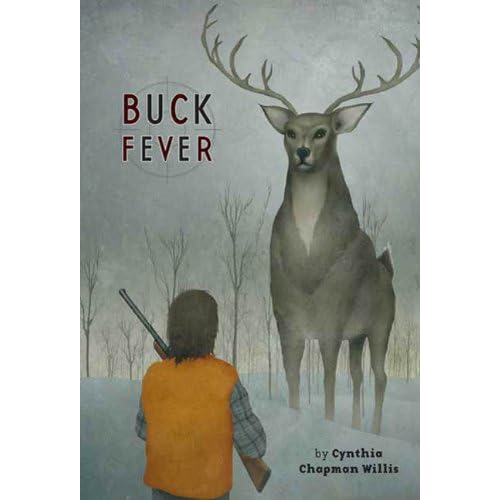
Cynthia Willis is the author of the Middle Grade novel, Buck Fever, published by Feiwel and Friends. Welcome Cynthia! We here at TheWritersbytheshore blog believe in BIC (butt in chair), but we also think that writing (and life) should take us and our readers to fun destinations. So here we go...
Tell us a little about your book. Will we need our passports?
In Buck Fever, Joey MacTagert’s dad wants his son to carry on the family tradition of hunting and use this special skill in tracking animals to hunt down the elusive big buck that roams the local woods. But Joey hates the idea of killing animals. He is more interested in art and hockey, two activities that his dad barely acknowledges. Yes, Joey knows how to track down Old Buck and has even gained the deer’s trust, but he’s kept this secret. However, when Joey and his older sister find themselves in the middle of tensions that they don’t understand, Joey tries to conquer his buck fever to keep the peace in his family and make his dad proud. Since this story takes place in Pennsylvania, no passport is needed here, either.
Wow! Sounds great. So, if I was going to have dinner with your main character, what exotic locale would we be dining at?
If you were to have dinner with Joey, from Buck Fever, you would probably be eating beef jerky and jelly beans, or pizza. Unfortunately, things are a bit unorganized and out of balance in Joey’s home, which explains how he gets tangled in so much trouble.
Who is the character you would vote as "Most likely not to make it through customs" and why?
Sam Hector, the villain in Buck Fever, would probably end up arrested if he tried to get through customs. In addition to his aggressive and argumentative personality, he is usually carrying pocket knives and other items considered dangerous.
If your main character was stranded on a desert island, what would be an essential travel item for them to take along?
Cub would need fresh water. They are both survivors and accustomed to outdoor living, but fresh water is tough to come by on a desert island. And as an author who adores her main characters, I’d be worried sick if either of them ended up stranded without fresh drinking water.
What advice would you offer to other writers embarking on their own writing adventure?
Pack lots of books to read along the way, don’t let the delays and the travel snags keep you from your destination, and enjoy the ride.
Subscribe to:
Posts (Atom)