Every year I create a long list of goals I intend to meet with regards to my writing. And every year they are abandoned at some point. Why? They are too broad and set for too long of a period. That does not work well for me. I always end up off track.
This year I am going to try and set smaller goals, more attainable ones that will ultimately lead me to reaching my overall goal.
My overall goal is to find an agent. And while that is a great goal,
it's a very vague goal. There are a lot of things that go into making
this happen. I need to break down this goal into smaller steps that I
will repeat over the course of the next year or more. (Hopefully, only
this year. lol)
For this I created a list of each of my writing projects, where I am in the process of writing them, and what the next step is for each of them. They vary from query process, rewrite the ending, polish, and outline so I can write a rough draft.
Deciding with project to tackle first was easy this time around. I have one manuscript that I have sent in the first ten pages for a critique with an editor at an upcoming conference. I have also decided to rewrite the ending. Therefore, that will be my first project and my completion date is set for two days before the conference, one week from yesterday. Yikes! I better get working.
Here are the steps I used to set my current goals. I will continue to use these steps to create new goals throughout the year.
1) Set Short Term Goals:
Ask yourself what you need to have in order to find that agent or publisher.
For me it is an agent. And the big thing is I need to have a compelling polished manuscript. While I have two, they have yet to garner anything other than rejections. Maybe that is because I have yet to find the right agent. Maybe it is because I need something better, more compelling.
My Short Term Goal: Rewrite ending for WIP #2.
2) Set a Time Line:
Ask yourself what you need to do in order to meet your short term goal.
Again I need that manuscript that will catch an agents attention. Right now I have two ready for the query process. One I have decided to rewrite the ending on. So that is my main focus at the moment. The timeline will be easy on this project as I submitted the first ten pages of that particular project to an editor for a critique at a upcoming conference. I have seven days, as of today, to rewrite the ending, which really in this case only consists of four chapters needing to be rewritten. After this is completed, I will switch gears to a different project that needs to be polished for the query stage. That will require a longer timeline to complete.
My Time Line: Six - Seven days. (Realistically I need to add next Friday in as well.)
3) Set a Schedule:
Ask yourself how much you can realistically get done in a day. Build in time for off days or the possibility of problems arising.
For me I look at my calendar and assume that while I try to get seven days of writing in, I will probably have two days a week where that is nearly impossible. So my goal is to work five days a week on my writing.
But how much is attainable per day? That is the big question and it completely depends on what stage I am in. When I draft I spend one day a chapter, writing a very messy draft. When I edit for plot it can take a day or two depending on how difficult the chapter is to whip into shape. For polishing I tend to take much longer. I like to spend a good deal of time working on each chapter, making sure everything is perfect. I am thinking with this new project I will be polishing in February I will take two to three days per chapter to make sure it is as good as it can be. With thirty-nine chapters in that project, it will definitely take me a great deal of time.
My Schedule: I have six scenes to rewrite. As I only have six to seven days to complete this task I have decided to rewrite one scene a day. If I have extra time on any given day I will write more.
4) Keep Track of Progress:
This is the fun part. At least I think so. Not long ago on Twitter I saw a tweet by the wonderful Victoria Schwab about her calendar trick, and she did a wonderful vlog about it. I have a planner type calendar that I use so I can also write down what project I worked on that day.
My Stickers: I will receive one sticker per scene rewritten. When goal is met I will receive an extra special sticker that day.
5) Reward System:
As much of a reward system the calendar stickers are, there also needs to be a reward for completing a project. I like to buy myself something sweet. Especially since I am trying to get into shape, that is a real treat. Sometimes just being able to move onto the next project is reward enough. Having something to look forward to is a great motivation. And eventually reaching the goal of finding an agent and/or publisher is the ultimate reward.
My Reward: I get to have a cupcake! I told you, I'm on a diet, that cupcake will be savored, every last bite. lol
Tell us what your short term goals are, if you have them?

Showing posts with label YA writing. Show all posts
Showing posts with label YA writing. Show all posts
Friday, January 31, 2014

Thursday, August 15, 2013
Character Relationships
Knowing how your characters know one another is an important aspect of the writing process. Sometimes one character knows a secret about another character. Or they have a secret crush. There are all kinds of little behind the scenes tidbits to know about our characters. As I have been working on preparing for a rewrite of a rough draft I realized there were specific relationship tidbits I needed to keep track of.
I go row by row. In the first row I write what Character A knows/feels about each of the other characters listed in separate columns above. Then I move on to Character B and so on. If a character doesn't know another character I simply put a big X in the box and move on. That happens occasionally.
The process has been eye opening. I have learned new things about some of my characters and have in turn begun to see layers within the story that I had previously not noticed.
How do you keep track of the information your characters know about one another?
Enter my Character Relationship Grid:
|
|
Character
A
|
Character
B
|
Character
C
|
Character
D
|
|
Character
A
|
|
|
|
|
|
Character
B
|
|
|
X
|
|
|
Character
C
|
|
X
|
|
|
|
Character
D
|
|
|
|
|
I go row by row. In the first row I write what Character A knows/feels about each of the other characters listed in separate columns above. Then I move on to Character B and so on. If a character doesn't know another character I simply put a big X in the box and move on. That happens occasionally.
The process has been eye opening. I have learned new things about some of my characters and have in turn begun to see layers within the story that I had previously not noticed.
How do you keep track of the information your characters know about one another?
Thursday, July 4, 2013
Don't Hold Back
Last week while pondering my current WIP I decided to gather up some of my old copies of the SCBWI bulletins. I revisited articles I have dog-eared throughout them hoping to find new inspiration. In the Jan/Feb 2012 an article caught my attention. In "Don't Hold Back" Joelle Anthony discusses her realization that her characters
were holding back. They were thinking of doing something, but not doing anything
for some reason or another.
I'm guilty of doing this as well. Too often I find myself rewriting scenes during the editing process to allow my characters to react realistically, and not as an adult would. Basically, I'm holding them back.
I'm glad I ran across this article again. I needed this reminder going into a major rewrite on my current WIP.
Anthony suggests allowing your characters to react the way they want to. Even if you open a new document to do so and never end up using it. You may learn something new from your characters or have a great new scene. She suggests going through your manuscripts looking for key phrases such as, "I wanted to, I tried, I wished, I lost my nerve, ..."
When I reread my manuscript this month I will be highlighting every instance where I use one of those phrases. Hopefully this will help me create a little new direction with my WIP and make it better.
After all, I was a very emotional teen. So why can't my teen characters be emotional as well? There really ins't a good reason not to let them let go now and then. Of course, they shouldn't let go all the time, but occasionally they should. Especially if it will help round out their character and further the story.
Are you holding back your characters?
I'm guilty of doing this as well. Too often I find myself rewriting scenes during the editing process to allow my characters to react realistically, and not as an adult would. Basically, I'm holding them back.
I'm glad I ran across this article again. I needed this reminder going into a major rewrite on my current WIP.
Anthony suggests allowing your characters to react the way they want to. Even if you open a new document to do so and never end up using it. You may learn something new from your characters or have a great new scene. She suggests going through your manuscripts looking for key phrases such as, "I wanted to, I tried, I wished, I lost my nerve, ..."
When I reread my manuscript this month I will be highlighting every instance where I use one of those phrases. Hopefully this will help me create a little new direction with my WIP and make it better.
After all, I was a very emotional teen. So why can't my teen characters be emotional as well? There really ins't a good reason not to let them let go now and then. Of course, they shouldn't let go all the time, but occasionally they should. Especially if it will help round out their character and further the story.
Are you holding back your characters?
Thursday, June 6, 2013
Manuscript Notes
I just pulled out a rough draft the other day to begin edits. While reading through the first few chapters I noticed notes I had made to myself about things I wanted to change in a future drafts. I was reminded of how I've changed making notes to myself within a manuscript over time. Mainly what popped into mind was another manuscript I was polishing a couple of months ago. I noticed a note to myself at the end of the manuscript.
I was shocked I had missed it so many times through the manuscript. Yet, at the same time I'm not to surprised. When I first began making notes to myself in drafts it was simple. I would put parenthesis around the note and the note itself would be in italics. Not the best method and I quickly found out during the editing process that I tended to miss them occasionally. I needed to devise a new method.
Then I ran across another blog post, one where the writer mentioned how she notates within her manuscripts. I can't remember now exactly what it was, but she would insert a symbol before the note. This got me thinking I wanted to have a way to easily find my notes, but I also didn't want to have to go through the process of inserting a symbol while the juices were flowing. So, I landed on adding an astrik before and after the note. Quick and easy!
This is the type of note I found in this most recent manuscript. I felt a wave of relief as I was going through it, realizing that all I have to do is a search for an * to find all of my notes. No more running across a note in a final draft. If the astrik doesn't come up in a search of the entire document, then I will know all of my notes have been addressed.
How do you make notes to yourself during the drafting and editing stages?
I was shocked I had missed it so many times through the manuscript. Yet, at the same time I'm not to surprised. When I first began making notes to myself in drafts it was simple. I would put parenthesis around the note and the note itself would be in italics. Not the best method and I quickly found out during the editing process that I tended to miss them occasionally. I needed to devise a new method.
Then I ran across another blog post, one where the writer mentioned how she notates within her manuscripts. I can't remember now exactly what it was, but she would insert a symbol before the note. This got me thinking I wanted to have a way to easily find my notes, but I also didn't want to have to go through the process of inserting a symbol while the juices were flowing. So, I landed on adding an astrik before and after the note. Quick and easy!
This is the type of note I found in this most recent manuscript. I felt a wave of relief as I was going through it, realizing that all I have to do is a search for an * to find all of my notes. No more running across a note in a final draft. If the astrik doesn't come up in a search of the entire document, then I will know all of my notes have been addressed.
How do you make notes to yourself during the drafting and editing stages?
Thursday, May 9, 2013
Making the Cut
I did something recently that made me cringe. I cut a scene I truly loved. It was a scene that I thought was great, but two of my critique partners made comments asking what it's purpose was. I mulled it over, for months.
I mean, I loved that scene. It was fun, my characters let loose, and the setting was beautiful.
How could it not be working?
I decided I was going to keep it. Yet, there was a lingering sliver of doubt zinging around in my head. It wouldn't go away. They were right. There was something amiss with that scene. It didn't work. No conflict. No tension. Nothing building or moving the story forward. It might have been fun and I might have loved it, but it didn't work.
Then came the millions of questions trying to figure out how to revise the scene, to make it fit. Nothing I tried worked. I just couldn't seem to get the scene right.
So I did something that made me crazy. I deleted the scene.
And something amazing happened. The story didn't fall apart. Surprisingly I think it's stronger without that scene.
I still have that scene on file, saved just in case. But it isn't in the final version.
Have you ever had to cut a scene you loved?
I mean, I loved that scene. It was fun, my characters let loose, and the setting was beautiful.
How could it not be working?
I decided I was going to keep it. Yet, there was a lingering sliver of doubt zinging around in my head. It wouldn't go away. They were right. There was something amiss with that scene. It didn't work. No conflict. No tension. Nothing building or moving the story forward. It might have been fun and I might have loved it, but it didn't work.
Then came the millions of questions trying to figure out how to revise the scene, to make it fit. Nothing I tried worked. I just couldn't seem to get the scene right.
 |
| Courtesy www.FreeDigitalPhotos.net |
And something amazing happened. The story didn't fall apart. Surprisingly I think it's stronger without that scene.
I still have that scene on file, saved just in case. But it isn't in the final version.
Have you ever had to cut a scene you loved?
Thursday, April 11, 2013
Love Your Antagonist
That's right, I said it - Love your antagonist!
Why?
In order to write the truth within the world we have created, as writers we must understand each and every one of our characters, and love them. We need to know what makes them tick and why they do the things they do. Not only will understanding all of your characters help you to love them, but it will also add a new depth to your story. And this includes those nasty villains.
Think of your favorite book. Now think of the antagonist. Was the antagonist entirely evil for no reason. Chances are he or she had a past that hurt them, creating this new direction in life that made him or her the antagonist of this story. The author probably understood this concept of loving and understanding all of the characters they wrote, adding that extra depth.
Think of it this way. No doubt you've been hurt at some point by someone else. I'm going to bet that the person who hurt you was not out to hurt you, or evil. On the same note, you have probably hurt someone else at another time, and you're not evil. Everyone has reasons for their actions. Most of all, no one thinks of themselves as bad or evil or wrong, or the antagonist of any story.
Therefore, we need to truly understand our characters. And in understanding them we learn to love them. We need to get inside them and figure out what it is that makes our antagonist the "bad guy." Give them pasts, weaknesses, and pains they must bear. Possibly it is through this pain that he or she has become that person who is antagonizing the heck out of your wonderful protagonist's journey.
Put yourself in the shoes of your antagonist and ask yourself these simple questions. If I were this antagonist what would I do? Why?
As Robert McKee says in his book, Story:

Why?
In order to write the truth within the world we have created, as writers we must understand each and every one of our characters, and love them. We need to know what makes them tick and why they do the things they do. Not only will understanding all of your characters help you to love them, but it will also add a new depth to your story. And this includes those nasty villains.
Think of your favorite book. Now think of the antagonist. Was the antagonist entirely evil for no reason. Chances are he or she had a past that hurt them, creating this new direction in life that made him or her the antagonist of this story. The author probably understood this concept of loving and understanding all of the characters they wrote, adding that extra depth.
Think of it this way. No doubt you've been hurt at some point by someone else. I'm going to bet that the person who hurt you was not out to hurt you, or evil. On the same note, you have probably hurt someone else at another time, and you're not evil. Everyone has reasons for their actions. Most of all, no one thinks of themselves as bad or evil or wrong, or the antagonist of any story.
Therefore, we need to truly understand our characters. And in understanding them we learn to love them. We need to get inside them and figure out what it is that makes our antagonist the "bad guy." Give them pasts, weaknesses, and pains they must bear. Possibly it is through this pain that he or she has become that person who is antagonizing the heck out of your wonderful protagonist's journey.
Put yourself in the shoes of your antagonist and ask yourself these simple questions. If I were this antagonist what would I do? Why?
As Robert McKee says in his book, Story:
"If you can't love them, don't write them."
Thursday, March 14, 2013
Why I Don't Have a Dream Agent
Admit it you have one, or did at one time. Yup, that's what I thought. As humans we all have our dreams, dream homes, dream jobs, and so on. It's good to dream. But what if your dream isn't in the cards? Yeah sure we can never predict if we may win the lottery and wind up actually living in our dream home. But, when it comes to "dream agents" writers tend to have this idea that it will happen. But we cannot predict what our dream agent will really think of our manuscript. Especially with as subjective as publishing really is. What one agents doesn't like, another may love. I even had my dream agent picked out at one time, yet I now question the point of even having one.
Why?
For starters just because an agent is well known, well liked, and has a great resume doesn't necessarily mean that agent is perfect for me. There could be any number of reasons why we wouldn't mesh, some not having anything to do with a manuscript. Personalities could clash, visions about my future in writing could differ, and the list could go on and on.
Then there's the issue with setting myself up for a huge disappointment. What happens if I send my query to my dream agent and get a rejection? That's a huge blow to one's ego, and ultimately creativity. I don't want that to happen. I don't want to place all of my dreams on one specific agent, only to see things come crashing down.
I have adopted a stance in life these days, what's meant to be will be. If I get a rejection from an agent then that wasn't the agent for me. I've also adopted an it-will-happen-motto. I will get an agent eventually, but I don't want to push which agent that will be.
There are plenty of great agents out there. Not every great book I have read has the same agent. In fact there are few authors I really like who have the same agent, at all. Yes, I researched my favorite books to see who the author's agent was. This is partly how I created my agent query list.
And there are plenty of newer agents at well established agencies just beginning to put their list of great authors together. All agents have to start out at the bottom and work their way up to the top. I've added several of these agents to my query list.
I will not allow myself to have a dream agent. Not before I have an agent. Because my true dream agent will be the agent I sign with, the one who sells my books, and the one I turn to every step of my publishing career.
What is your stance on dream agents?
Why?
For starters just because an agent is well known, well liked, and has a great resume doesn't necessarily mean that agent is perfect for me. There could be any number of reasons why we wouldn't mesh, some not having anything to do with a manuscript. Personalities could clash, visions about my future in writing could differ, and the list could go on and on.
Then there's the issue with setting myself up for a huge disappointment. What happens if I send my query to my dream agent and get a rejection? That's a huge blow to one's ego, and ultimately creativity. I don't want that to happen. I don't want to place all of my dreams on one specific agent, only to see things come crashing down.
I have adopted a stance in life these days, what's meant to be will be. If I get a rejection from an agent then that wasn't the agent for me. I've also adopted an it-will-happen-motto. I will get an agent eventually, but I don't want to push which agent that will be.
There are plenty of great agents out there. Not every great book I have read has the same agent. In fact there are few authors I really like who have the same agent, at all. Yes, I researched my favorite books to see who the author's agent was. This is partly how I created my agent query list.
And there are plenty of newer agents at well established agencies just beginning to put their list of great authors together. All agents have to start out at the bottom and work their way up to the top. I've added several of these agents to my query list.
I will not allow myself to have a dream agent. Not before I have an agent. Because my true dream agent will be the agent I sign with, the one who sells my books, and the one I turn to every step of my publishing career.
What is your stance on dream agents?
Thursday, January 31, 2013
Messy First Draft vs. Editing While Drafting
When I first began writing I edited as I went. I would edit the heck out of a chapter before moving on to write the next. There was this little voice in my head that told me I had to make each chapter perfect before I could think about the next chapter. I let my inner critic loose before the work was ready to be critiqued.
As a result I stopped writing the same manuscript about three separate times part way through. It was as if I lost the momentum when I stopped to edit. I would get to a point where everything was great up to that point, but I had no idea where to go from there. Even with my trusty outline. I thought outlining was the problem. So I decided that for my next manuscript I was going to fly by the seat of my pants and just write what ever came next. Of course, that didn't work. I began two new projects, both of which I set aside after only six chapters each.
It seemed outlining might not have been my problem after all. Then again, I was still going over each chapter multiple times before moving on. Then I would think what the heck is supposed to come next? I did need that outline in the end, but there was another problem with my drafting process.
A short time later I learned of NaNoWriMo. This literally was the best thing for my writing. Why? I did not have the time to edit each chapter as I wrote that first draft. But, I kept up the momentum and was surprisingly pleased with that first draft. Regardless of how unbelievably messy it was. The story was there, the plot was tangeable, and I completed it. That was the first manuscript I ever completed. And it was also a newer version of my original manuscript.
Now, it is still sitting on the shelf hardly touched two years later, but it still has that potential that none of the previous versions had. I have learned to outline my plots better and become a better writer. Yet, my rough drafts are always messy. Yet as I sat down recently to edit my last NaNo project I found a really interesting story that does not need nearly as much work as I thought it might. The writing needs to be smoothed out and some of the details need to be worked on, but overall I have a decent draft. Even if it appears rather messy.
And since learning not to edit while I draft I have also learned that it is completely acceptable to have your beta readers / critique partners take a stab at the manuscript before doing too much editing. I now go through each manuscript to fix plot holes first, hand it over to my cps, and then do the major edits.
What are your thoughts on messy first drafts? Do you edit while you draft? Which method works better for you?
As a result I stopped writing the same manuscript about three separate times part way through. It was as if I lost the momentum when I stopped to edit. I would get to a point where everything was great up to that point, but I had no idea where to go from there. Even with my trusty outline. I thought outlining was the problem. So I decided that for my next manuscript I was going to fly by the seat of my pants and just write what ever came next. Of course, that didn't work. I began two new projects, both of which I set aside after only six chapters each.
It seemed outlining might not have been my problem after all. Then again, I was still going over each chapter multiple times before moving on. Then I would think what the heck is supposed to come next? I did need that outline in the end, but there was another problem with my drafting process.
 |
| Image courtesy of anankkml at freedigitalphotos.net |
Now, it is still sitting on the shelf hardly touched two years later, but it still has that potential that none of the previous versions had. I have learned to outline my plots better and become a better writer. Yet, my rough drafts are always messy. Yet as I sat down recently to edit my last NaNo project I found a really interesting story that does not need nearly as much work as I thought it might. The writing needs to be smoothed out and some of the details need to be worked on, but overall I have a decent draft. Even if it appears rather messy.
And since learning not to edit while I draft I have also learned that it is completely acceptable to have your beta readers / critique partners take a stab at the manuscript before doing too much editing. I now go through each manuscript to fix plot holes first, hand it over to my cps, and then do the major edits.
What are your thoughts on messy first drafts? Do you edit while you draft? Which method works better for you?
Thursday, January 17, 2013
Letting Go
My manuscripts are a lot like my kids, they're my babies. I find it hard to admit that my baby girl is in high school this year. It is even more frightening to realize that in less than four years she will be a high school graduate and off at college. I still think of her as my little bubbling baby girl toddling around the house. And while my daughter can, and will, protest that she is not a baby, my manuscripts cannot argue with me. They simply sit back as if waiting for me to admit they are ready to see the world.
This past Sunday was critique group Sunday. My favorite Sunday of the month. I love getting together with the ladies and discussing all things books, writing, and publishing. One of our main topics was what our immediate goals are. I walked into the meeting completely prepared to put very little on the table for my small goal. I have been suffering from neck pains and headaches for a while now, and therefore was afraid to really put much on my list of goals for this year.
But that all changed after talking to the wonderful ladies in my group. I have a completed, polished manuscript ready to go out into the world. But, for one reason or another I have held back from sending out queries on this particular manuscript. I had convinced myself that it would be a different project I would query this year, and only that one. Yet, after discussing projects and listening to everyone's goals I realized I have to let go. I have to try. Even if agents have already seen a lot of this particular type of story I should still attempt to get out there.
I continually convince myself it's not ready. Even though I have been doing a final read through this week and I am finding little to fix. Truth is, I need to get over this fear of mine and let it go. I need to try, see where it takes me. You never know if this is the one to land you an agent, or the one to give you more learning experience. It's worth a shot. Right?
Is it hard for you to let go of your manuscripts? Please tell me I'm not the only one. lol
This past Sunday was critique group Sunday. My favorite Sunday of the month. I love getting together with the ladies and discussing all things books, writing, and publishing. One of our main topics was what our immediate goals are. I walked into the meeting completely prepared to put very little on the table for my small goal. I have been suffering from neck pains and headaches for a while now, and therefore was afraid to really put much on my list of goals for this year.
But that all changed after talking to the wonderful ladies in my group. I have a completed, polished manuscript ready to go out into the world. But, for one reason or another I have held back from sending out queries on this particular manuscript. I had convinced myself that it would be a different project I would query this year, and only that one. Yet, after discussing projects and listening to everyone's goals I realized I have to let go. I have to try. Even if agents have already seen a lot of this particular type of story I should still attempt to get out there.
I continually convince myself it's not ready. Even though I have been doing a final read through this week and I am finding little to fix. Truth is, I need to get over this fear of mine and let it go. I need to try, see where it takes me. You never know if this is the one to land you an agent, or the one to give you more learning experience. It's worth a shot. Right?
Is it hard for you to let go of your manuscripts? Please tell me I'm not the only one. lol
Thursday, November 8, 2012
Realistic Settings
While taking a walk with my toddler recently I observed everything I could about my settings. Not because I am writing a book based in New Jersey, but rather what is different here than where my actual WIP takes place. Since my story takes place in a real town in West Texas I need facts. As I edit I need these things to refer back to, constantly.
During the summer of 2011 I spent several weeks in Texas visiting family and we took a day trip (very long one) out to San Angelo, Texas where I have based this particular WIP. Why did I chose San Angelo? I used to live there, once upon a long time ago. It's been a long while since I had been there, so off we went to see the different sights I had planned on including.
I wondered what was different, if any, for creating a fictitious setting. So I thought back to another manuscript for which I created a town along the Jersey Shore called ??. Although I created this particular town, I based it on a nearby town to where I live, one I think of as being perfect for this manuscript. So, I used what I could of that town to create my setting folder.
Here's a list of those things I found necessary to keep the setting realistic.
1) Map - They help keep different locations in perspective. Regardless of whether it is explained to the reader where certain places are, it is great for the writer to have a sense of where they are, what's around that location, how long it takes to get from one location to another, and so on. It is also helpful to describe sounds based on what is nearby. People hear different sounds based on different locations. Knowing what is nearby will help with sound.
2) Pictures - This helps when describing locations based on sight. I have tons from my trip to San Angelo. While I might not have many for my local site, I drive there regularly which makes it easy to describe.
3) Travel - I know this one is difficult, but if possible I like to have traveled to the location I am writing about. There are different feelings and sensations you get. Texas summers are vastly different from New Jersey summers. Likewise, the winters are extremely different as well.
During the summer of 2011 I spent several weeks in Texas visiting family and we took a day trip (very long one) out to San Angelo, Texas where I have based this particular WIP. Why did I chose San Angelo? I used to live there, once upon a long time ago. It's been a long while since I had been there, so off we went to see the different sights I had planned on including.
I wondered what was different, if any, for creating a fictitious setting. So I thought back to another manuscript for which I created a town along the Jersey Shore called ??. Although I created this particular town, I based it on a nearby town to where I live, one I think of as being perfect for this manuscript. So, I used what I could of that town to create my setting folder.
Here's a list of those things I found necessary to keep the setting realistic.
1) Map - They help keep different locations in perspective. Regardless of whether it is explained to the reader where certain places are, it is great for the writer to have a sense of where they are, what's around that location, how long it takes to get from one location to another, and so on. It is also helpful to describe sounds based on what is nearby. People hear different sounds based on different locations. Knowing what is nearby will help with sound.
2) Pictures - This helps when describing locations based on sight. I have tons from my trip to San Angelo. While I might not have many for my local site, I drive there regularly which makes it easy to describe.
3) Travel - I know this one is difficult, but if possible I like to have traveled to the location I am writing about. There are different feelings and sensations you get. Texas summers are vastly different from New Jersey summers. Likewise, the winters are extremely different as well.
Thursday, October 25, 2012
Six Conflict Questions To Ask
I'm not a person who likes conflict. Not even the tiniest bit. However, when it comes to my characters I have no choice but to make them face conflict. Why put these characters through something I dislike myself? If I don't, there will be nothing to read, no reason to turn the page and find out what happens in the end.
As I edit my current WIP I am finding there are certain questions I must ask myself. And I ask them for every single chapter. I want to make sure that there is some semblance of conflict in each and every chapter, whether it is external, internal, or romantic. It must be there. It is what fuels the reader on, keeps them on the edge of their seats, and most of all loving the book in the end.
Here are the 6 main conflict questions I ask myself to unlock the best possible plot.
1) What does my main character want and why?
2) How could my main character suffer emotionally?
3) Could my main character sacrifice something to meet his/her goal?
4) What could my secondary characters do to complicate this goal?
5) Could these complications be even worse?
6) What could distract my main character from his/her goal?
As I edit my current WIP I am finding there are certain questions I must ask myself. And I ask them for every single chapter. I want to make sure that there is some semblance of conflict in each and every chapter, whether it is external, internal, or romantic. It must be there. It is what fuels the reader on, keeps them on the edge of their seats, and most of all loving the book in the end.
Here are the 6 main conflict questions I ask myself to unlock the best possible plot.
 |
| Courtesy FreeDigitalPhotos.net |
2) How could my main character suffer emotionally?
3) Could my main character sacrifice something to meet his/her goal?
4) What could my secondary characters do to complicate this goal?
5) Could these complications be even worse?
6) What could distract my main character from his/her goal?
Monday, October 1, 2012
What A Zombie Taught Me About Writing

I like to watch movies. My son, a filmmaker, and I sit on the couch and we like to discuss the shape of the film as it would be written on the page in the form of a script. It helps I think to visualize how I am laying out my own current WIP. We talk about plot and subplot and about a character's emotional arc. But yesterday, while watching a movie called 28 Days Later, which is a pretty good zombie movie I must say, I noticed something about the main character's emotional arc or rather lack thereof.
28 Days Later is about a zombie invasion that centers around London. The opening scene shows a group of survivors hold up in a country house. The first characters we meet are a couple. As the wife cooks one of the last can of beans left in the pantry, she is overcome by emotion. Her husband lovingly kisses her to console her. A few minutes later the house is overrun by zombies and given a chance to save his wife, the husband wusses out and runs for his own life. "Quick, stop the movie!" I yelled to my son, for this was the optimal moment I thought to discuss a character's emotional arc. "You see how the writer set it up in the audience's mind that this was an upstanding guy, but now he's gone and done the unimaginable and abandoned his wife?" I said. "Now for the rest of the movie he's going to have to face his demons and his own cowardice. At some point he's going to have to redeem himself in order to conclude his own emotional journey." I must say I was rather proud that I could identify from a writer's point of view what the screenwriter was doing. But then I was surprised by what happened next. The main character was not the main character. When his wife is found alive (it appears she possesses a special immunity), she gets her own revenge by kissing him, therefore passing on the virus and turning him into a virus. Dang, I thought. I was wrong. But also intrigued. I loved how the writer took me on a completely different path than I expected.
So what's the point I'm trying to make here? Well, I have a few. For one thing, I think movies are a great way to learn about story. Of course the rules of the screen don't always apply to the rules of writing a novel (for instance scripts are often about action and not much description), but sometimes the chances a screenwriter takes to shuffle a story around could inspire you to write in a different way than you ever conceived before.
Also, as I go along in this process, I see that the most exciting work is the work that breaks the steadfast rules I've worked so hard and long to learn. Not to say that it's not important to learn these rules, but great stuff is about thinking outside the box.
So tell me, have you watched any movies lately that have inspired your writing?
Thursday, September 27, 2012
Time and Patience
At the start of 2012 I had three manuscripts needing tending to and I hoped to have at least two of them out on submission to agents by the end of the year. I have had to change those plans as only one manuscript will be out by 2013. One of the other manuscripts I had planned to have out on query rounds was last year's NaNoWriMo project. It has been in the works a long time and taken different turns a couple of times.
I first had the idea for the manuscript in January of 2011. It took all I had to do some research and work the characters out in my head. I had to force myself not to sit down and write the rough draft right away. It was not ready. I was not ready. No matter how much I told myself I knew what the story was about and where it was going to end up, I never felt that it was quite there yet. So, I forced myself to be patient and wait until November. After all that was my original goal, use it as my NaNo project.
In September I had an epiphany of sorts. The story I had been planning all along was not where my characters needed to go. It was not their story. So, I sat down and worked it all out on paper. At this point I was nearing the deadline to have my notes and outline ready. I finished my outline and notes on Halloween, just in time. By the end of November I was thrilled with the outcome of my manuscript and could not wait to get back to it and edit. I had a few ideas on what to change in order to make it better. Yet, I knew I needed to put some distance and time between the rough draft and editing.
My plan was to be back to editing it this summer. Once again, I knew it was not time. When I sat down to edit, I was not ready. The story was not there in my mind like I had hoped it would be. There was something wrong with it and I had no idea where that problem was. So, I went back to a different project and worked on it all summer.
While editing this other project I found myself reading an intriguing article in Astronomy Magazine. It had absolutely nothing to do with any of my projects, yet everything to do with one in particular. I mulled over the idea of changing my NaNo project, yet again. This time to fit the parameters of a science fiction novel, rather than a dystopian as the rough draft is written.
It has been almost two years since I first had the idea and it this manuscript has driven me crazy at times. Yet, I know that by giving this project time I have had the opportunity to really delve into the world and the characters better. I have had time to mull over the world the characters live in and ask myself many questions. I have had time to research different aspects of a world I hope to share with others.
It has taken a lot of patience not to delve right in and make the changes without first knowing the world and characters inside and out. Now, nearing NaNoWriMo time again, I am finally feeling ready to work on it again and share it with my CPs in the new year as I edit it.
Do you give yourself time between edits? Do you force yourself to be patient while the story and characters evolve? Or do you delve right in?
I first had the idea for the manuscript in January of 2011. It took all I had to do some research and work the characters out in my head. I had to force myself not to sit down and write the rough draft right away. It was not ready. I was not ready. No matter how much I told myself I knew what the story was about and where it was going to end up, I never felt that it was quite there yet. So, I forced myself to be patient and wait until November. After all that was my original goal, use it as my NaNo project.
In September I had an epiphany of sorts. The story I had been planning all along was not where my characters needed to go. It was not their story. So, I sat down and worked it all out on paper. At this point I was nearing the deadline to have my notes and outline ready. I finished my outline and notes on Halloween, just in time. By the end of November I was thrilled with the outcome of my manuscript and could not wait to get back to it and edit. I had a few ideas on what to change in order to make it better. Yet, I knew I needed to put some distance and time between the rough draft and editing.
My plan was to be back to editing it this summer. Once again, I knew it was not time. When I sat down to edit, I was not ready. The story was not there in my mind like I had hoped it would be. There was something wrong with it and I had no idea where that problem was. So, I went back to a different project and worked on it all summer.
 |
| Courtesy of FreeDigitalPhotos.net |
It has been almost two years since I first had the idea and it this manuscript has driven me crazy at times. Yet, I know that by giving this project time I have had the opportunity to really delve into the world and the characters better. I have had time to mull over the world the characters live in and ask myself many questions. I have had time to research different aspects of a world I hope to share with others.
It has taken a lot of patience not to delve right in and make the changes without first knowing the world and characters inside and out. Now, nearing NaNoWriMo time again, I am finally feeling ready to work on it again and share it with my CPs in the new year as I edit it.
Do you give yourself time between edits? Do you force yourself to be patient while the story and characters evolve? Or do you delve right in?
Monday, September 3, 2012
Bite Me and Other interesting ways to Market Your Book

I'm just back from the grocery store and something caught my eye. On my way out of the store, I noticed something on the community billboard, amidst the flyers for chinese auctions and weight loss plans. It was an adorable postcard of a dog with wings. Above it the title BITE ME. Since I love dogs (and who doesn't), I took the time to read the few words on the card. BITE ME is a memoir written by a meter reader. Now isn't that clever I thought. Not only the premise but also the way in which the meter reader/author was marketing herself. Now I haven't always been a friend of the marketing aspect of the whole writing world. In the beginning of my career, self-promotion was a downright uncomfortable thing. In fact, when the marketing person at my first publisher invited me to a lunch with a bunch of New York librarians and asked me if the date was good for me, I initially said, "Well, if that date doesn't work for me, you can go ahead without me." There was a pause on the other end of the line at that point and then she proceeded to explain that the luncheon was for me. Well, that freaked me out! As did many other attempts I made at getting me and my book out there in the public sphere. For a shy person like me, marketing has always been as comfortable as putting on a suit made of pine needles.
But since the internet has taken over our lives and turned the publishing world on its ear, marketing has become a bit more palatable for me. I recently had a consultation with Eliza Cross from Cross Media. Eliza is a publicist and an author herself. She maintains four blogs, each one focused on the various aspects of her creative and professional life. She has a bacon blog for her bacon cookbook and a blog for her upcoming contemporary romance. In our discussions, Eliza emphasized that an author needs to be present on the internet. She said an author's first priority should be Goodreads.com. Having an author page on Goodreads that links your blog and gives your readers an opportunity to interact with you on the one passion we all have in common - reading - is great. Next, she suggested I create a dedicated author page on Facebook. Previous to this, I had my personal FB page, but Eliza said that my author page should be focused on all things writing, rather than personal tidbits. The last thing Eliza recommended was having a Twitter account. I was rather relieved, however, when she said that Twitter should take up no more than five minutes of my day since the stats show that Twitter does not reap a lot of rewards due to the rapid fire pace of the feeds.
So going back to BITE ME. Aside from a great title and a cute picture on the postcard, I loved that the author had the chutzpah to pin the card in a place where I least expected it. I don't know if I'll buy the book, but it has made me curious. And it's that curiosity that we want to spark in our reader because the next step, we hope, is a purchase.
So tell me, have you come across a book in an interesting way and has that way made you want to buy that book?
Monday, August 20, 2012
Weaving Plot and Theme

I recently heard famous Hollywood producer, John Landau say that today's filmmakers should be more concerned with theme than they are with plot. He went on to say that theme is what brings an audience in and makes people want to see a movie. This made me think about how writers tackle plot and theme.
So what is the distinction between plot and theme? Plot is what happens to a character, the obstacles and intricacies that keep a reader interested. Theme however is more like a mission statement or a message that the writer wants to convey. Lots of writers don't like the word message when talking about their writing. Writers don't (and shouldn't) preach and a reader doesn't want to be preached to (I'm sure there are plenty of other places to go for that sort of thing). However, for a story to be satisfying to the reader, a character's journey must mean something.
As writers we often fall in love with a character or a plot idea first and don't really consider the deeper undercurrents of our story until we get to that yucky middle part of our novels where we hit and wall and ask ourselves, "What the heck is this all about? And what do I do next?" I've been at that wall many a time and it has driven me to despair, usually resulting in a huge carb binge and stuffing the manuscript in the drawer, never to be seen again. A way I've come to avoid hitting this wall is to do some preliminary journaling or just plain thinking about my character, the plot and what the heck I'm trying to say with my story. I also ask myself two questions: WHAT DOES MY CHARACTER WANT? and WHAT DOES MY CHARACTER REALLY WANT?
On the surface, these questions may appear to be the same, but let's look at an example from my soon-to-be released YA, Devil's Triangle.
Here's the premise (the short version): 17 year old Cooper gets another chance at life when Lucinda, the Devil's sister, sends him back to earth to find Grace, a girl he has known in another life.
So what does Cooper want? Cooper wants to find Grace, figure out what Lucinda has up her sleeve, and avoid Hell. This is essentially the plot.
But what does Cooper REALLY want? Well, if I had Cooper lie down on my therapist's couch, he would reveal to me that what he really wants is to feel worth-while. That, in his previous life as a juvenile delinquent, he realizes he did wrong and that this new life is a way to finally get it right. So the theme of my book, if I had to summarize it in a word is REDEMPTION. Now redemption or forgiving ourselves for screwing up is something we've all dealt with so when a reader reads Cooper's story, they will see a bit of themselves.
So that's the difference between Plot and Theme in a nutshell. What do you think about this topic? Are you conscious of the distinction when you write your stories?
Monday, August 6, 2012
Authors and Books that Take you Places!
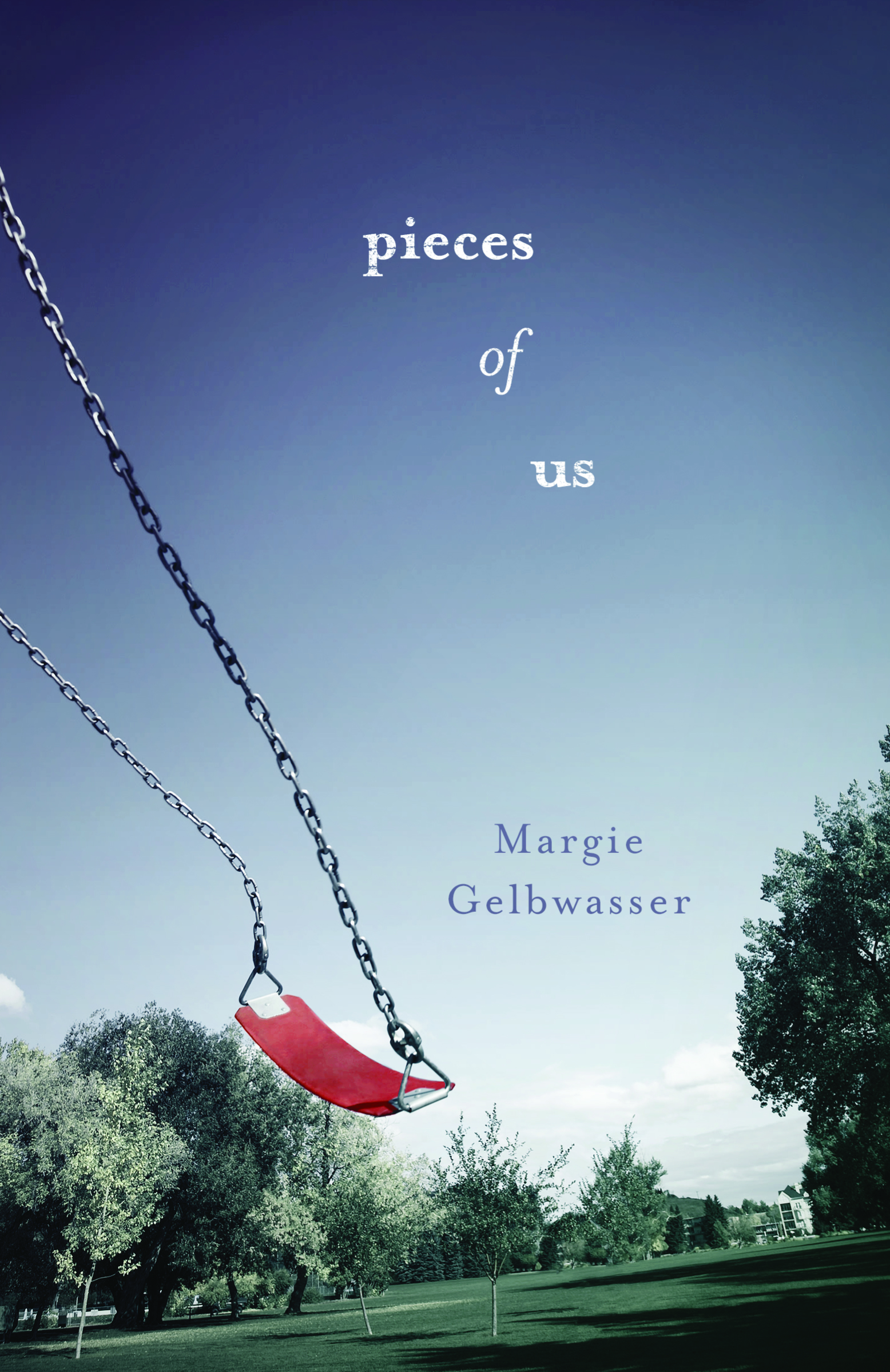
Tell us a little about your book. Will we need our passports?
PIECES OF US is about four teens and the secrets each of them faces. Every summer, they escape their turbulent lives and their hometowns of Cherry Hill, NJ and Philadelphia, PA, and travel to the Catskills in Upstate, NY. So, while the trip may be a bit long, it's fairly local so no passports needed
PIECES OF US is about four teens and the secrets each of them faces. Every summer, they escape their turbulent lives and their hometowns of Cherry Hill, NJ and Philadelphia, PA, and travel to the Catskills in Upstate, NY. So, while the trip may be a bit long, it's fairly local so no passports needed
Wow! Sounds great. So, if I was going to have dinner with your main character, what exotic locale would we be dining at?
Since POU deals with four main characters, I'm going to share four locales.
If you were to dine with Katie, she would love to go anywhere with noise and people--a place where the commotion could clear her head and distract her from her thoughts. She would love dining anywhere in New York City, especially at night when it's aglow and alive.
Her sister, Julie, is pretty simple. All she wants is to eat food her mother prohibits, like fries and burgers and shakes. If you could sneak away to a McDs on the outskirts of town, she'd love you for life.
Then we have our boy main characters, brothers Kyle and Alex. They live Philly, and Kyle loves ethnic food, especially Mexican. He'd love to dine at some authentic Mexican hotspot with cultural music and food. The fact that his brother Alex would not set foot in such a place, would make it all the sweeter.
Finally, we have Alex. Foodwise, it's not hard to please him. He doesn't go for the exotic--not even a little. Give him a few slices of pizza, and he's golden. He does have a favorite pizza place, though. It's in Philly, and is called Lorenzo's.
Who is the character you would vote as "Most likely not to make it through customs" and why?
This would be Alex, hands down. Not so much for what he may be carrying, but because his mouth might get him into trouble. If angered, he could easily curse someone out or yell at them. And, if he had a female customs agent, it's possible he could inappropriately flirt with her, delaying his departure.
If your main character was stranded on a desert island, what would be an essential travel item for them to take along?
I'll break it down for each again. :-)
Katie: Katie would take her iPod or drawing pad. The iPod is essential for when her thoughts get too loud, and the drawing pad helps her put her ideas on paper and cope with the issues gnawing at her.
Julie: Some literary classics and a crate of junk food. The classics so she could exercise her brain, and the junk food because her mom won't let her eat that at home. Being trapped on a desert island has some perks. :-)
Alex: He's a tough one. I'm not sure what is an essential item for him. He doesn't really need or crave things. He has the horrible habit of smoking, so packs of cigarettes would probably be his go to items. Those or a girl. He loves those too. Can he bring a girl to the island?
Kyle: Kyle is such a broken soul, but he loves to escape in schoolwork and books. I think he would take a few classics with him as well and books of poetry, maybe Dylan Thomas.
What advice would you offer to other writers embarking on their own writing adventure?
Don't let anything stop you, and if your imagination beckons, follow it!!
Toni De Palma
http://www.tonidepalma.com/
Thursday, August 2, 2012
First Sentences
As writers we are constantly trying to hook our readers and make them keep reading. We want them to read that first chapter and decide right then and there that they can't put the book down. However, it doesn't just start with the first chapter, or paragraph. It's that very first line.
Seriously, I read agents blogs all the time and know they decide extremely quick if the book is worth reading more of or not. So, we need to hook them instantly, within that very first sentence.
This was something I had not pondered too much until I read this post by Jodi Meadows over on WriteOnCon last year. After that I revisited my WIPs only to realize my first lines were duds. Serious duds. I'm currently working on them, and maybe I will share them with you at a later date - when they don't stink so much.
All of this first line thinking had me pondering the first lines from currently HOT books. I thought I would share a few with you today. I haven't read all of them yet, but can you guess why they have taken up residence on my Kindle?
Your Turn -> Tell us your favorite first line.
 |
| Image courtesy of www.freedigitalphotos.net |
This was something I had not pondered too much until I read this post by Jodi Meadows over on WriteOnCon last year. After that I revisited my WIPs only to realize my first lines were duds. Serious duds. I'm currently working on them, and maybe I will share them with you at a later date - when they don't stink so much.
All of this first line thinking had me pondering the first lines from currently HOT books. I thought I would share a few with you today. I haven't read all of them yet, but can you guess why they have taken up residence on my Kindle?
"The screw through Cinder's ankle had rusted, the engraved cross marks worn to a mangled circle."
Cinder by Marissa Meyer
"They called the world beyond the walls of the Pod 'the Death Shop.'"
Under the Never Sky by Veronica Rossi
"The moment she saw the young man walking down the darkened hall toward her, twirling his walking stick, Finley Jayne knew she'd be unemployed before the sun rose."
The Girl in the Steel Corset by Kady Cross
"'You don't want to kill me,' I said."
Clarity by Kim Harrington
"I've been locked up for 264 days."
Shatter Me by Tahereh Mafi
"There is one mirror in my house."
Divergent by Veronica Roth
Your Turn -> Tell us your favorite first line.
Thursday, July 19, 2012
Balancing Writing and Summer Vacation
 |
| Photo Courtesy FreeDigitalPhotos |
When I opened my planner early this week I realized I am way behind my anticipated goal. So far behind I have been forced to re-evaluate my current plan of attack. I would like to have my current wip polished in time for WriteOnCon.
When I set this goal back in May I truly believed I had more than enough time, possibly time to start polishing a different project. This got me thinking of how I would meet my writing goals.
Here are five ways I've decided to use as means to meet this rather lofty goal.
1. Schedule Time To Write - Set aside time each day to write and stick to it. Don't schedule other activities at that time. Being summer sticking to the same time each day is difficult. Try varying the times each day.
2. Hold Yourself Accountable - This works great with critique partners. Talk weekly and ask each other how you are doing.
3. Set Goals - Set daily, weekly, and monthly goals. This is something I find difficult during the summer months. Vacations and kids at home slow down the writing tremendously. Make sure your goals are not too outrageous. Keep them realistic for the situation.
4. Reward Yourself - It could be celebrating with a brownie or cupcake. Or even going out to lunch or dinner as a celebration. There's always my personal favorite, buying more books.
5. Ignore The Internet - (This is the one I'm finding the most difficult to adhere to.) Don't allow yourself to check your emails or log on to the various social networks you use until after you have met your daily goal.
What are some ways you balance writing during summer vacation?
Monday, July 9, 2012
Authors and Books that Take You Places!

Tell us a little about your book. Will we need our passports?
My new book, Ferocity Summer, takes place in my home state of New Jersey with the exception of a road trip to Florida. So, no passports are required, but you should definitely pack some sunscreen.
Wow! Sounds great. So, if I was going to have dinner with your main character, what exotic locale would we be dining at?
Who is the character you would vote as "Most likely not to make it through customs" and why?
Oh, boy. In the book my main character does eat at least one meal at the Budd Lake Diner in Budd Lake, NJ, which I'm pretty sure doesn't qualify as exotic. That said, you can't go wrong with their feta cheese omelette.
That's a tough call. Scilla's best friend Willow is battling drug addiction. So, there's a pretty good chance she wouldn't clear customs. Then there's Bill who is busy spending his summer building a bomb to overthrow the government. Really, the more I think about it, I'm not sure if there's anyone in this book who would breeze through customs.
If your main character was stranded on a desert island, what would be an essential travel item for them to take along?
Like me, Scilla is a reader. So, she would definitely want a good book to read. Of course, like me she tends to be pretty voracious in her reading habits. She might have a tough time picking just one book to bring along. Has anyone come up with a solar powered e-reader, yet? That might be a good solution.
What advice would you offer to other writers embarking on their own writing adventure?
Thanks, Alissa and Bon Voyage!
First and foremost, I would say write the book that you want to read because the most important thing is enjoying the journey.
Thanks, Alissa and Bon Voyage!
Toni De Palma
http://www.tonidepalma.com/
Thursday, July 5, 2012
Words To Avoid
Why?
They catch all of those pesky
 |
| <p>Image courtesy of <a href="http://www.freedigitalphotos.net">FreeDigitalPhotos.net</a></p> |
I have a short list in "Currently Editing" folder.
- that
- just
- seem
- like
- really
- feel
- start
- already
- felt
- very
Cut unnecessary words.
Every word counts.
Gardner gives a list which I have now plucked more words from to add to my own list.
- actually
- almost
- appears
- basically
- close to
- eventually
- exactly
- finally
- kind of
- nearly
- practically
- simply
- somehow
- somewhat
- suddenly
- truly
- utterly
Your Turn -> What words sneak into your writing too often?
Subscribe to:
Posts (Atom)